A garage floor is rarely glamorous, but it is one of the highest-value surfaces you own. In Tampa, where humidity, salt air, and frequent heavy rains confront concrete every year, choosing the right concrete services and treatment for a garage floor is as much about longevity as it is about looks. If you want a space that resists stains, tolerates Florida's moisture, and looks intentional when friends or clients walk in, the decisions you make now will determine whether your floor lasts five years or fifty.
Why focus on the garage? Because it is a crossroads for cars, tools, garden chemicals, pets, and human traffic. A poor surface will flake, crack, and trap water in ways that accelerate deterioration. A well-chosen system transforms that space into usable, low-maintenance real estate. Here I explain practical options for concrete garage floors in Tampa, the trade-offs you need to weigh, common mistakes I see from DIYers, and what to expect when hiring concrete finishing contractors such as All Phase Concrete and similar firms.
How Tampa climate changes the equation
Tampa's coastal environment brings two main demands. First, elevated humidity and occasional standing water encourage efflorescence and surface deterioration if the concrete is porous or poorly sealed. Second, proximity to salt air and road salt (used sporadically inland during cold snaps) increases the risk of corrosion for any embedded metal, and reduces the lifespan of thin surface treatments that allow moisture transmission.
These effects are incremental but relentless. A sealer that performs well for an ordinary inland climate may blister or delaminate faster here. That reality pushes the recommended solutions toward systems that control moisture vapor transmission, adhere chemically to the concrete, and include a defined maintenance plan.
Common garage floor systems and when to choose them
There is no single "best" garage floor. Different systems suit different needs, budgets, and future use cases. Below I describe the main options and the practical trade-offs.
Polished concrete. When done by experienced concrete finishing contractors, polished concrete turns the slab into a durable, low-maintenance surface. It removes weak paste and densifies the surface with a silicate hardener. The result is resistance to abrasion and easier cleaning. Polished concrete performs well under heavy vehicle load and does not hide cracks; it makes them part of the aesthetic. Polishing is an excellent long-term choice if you want a subtle, industrial look, minimal VOCs, and the lowest routine maintenance.
Epoxy coatings. Epoxy remains one of the most popular choices for garages. It offers a thicker barrier against oil and chemical staining, customizable color options, and the familiar glossy finish some homeowners want. However, epoxy is best applied to a properly prepared and structurally sound slab. It can be sensitive to moisture vapor drive coming up from the slab, which will cause bubbling and delamination. In Tampa, ask contractors to test for vapor transmission and use epoxy systems designed for higher moisture conditions, or apply a vapor mitigation primer first.
Polyaspartic and polyurea (fast-cure urethanes). These are polymer coatings that cure quickly and tolerate temperature swings. They often outperform epoxy in UV stability and flexibility, resisting yellowing and cracking. Polyaspartics can be more expensive but reduce downtime because they cure faster. For commercial garages or homeowners who cannot leave the garage unusable for several days, these systems are attractive. They also handle the humidity better when properly mixed and applied by experienced technicians.
Stained concrete. If you like visible aggregate and natural hues, acid staining or dye staining penetrates and colors the Find more info slab without adding a coating film. It is elegant and low-maintenance but does not provide the same protective barrier against oil and chemicals as epoxy or urethane. Combining staining with a sealer or a thin protective clear coat is a common approach, giving both color and resistance.
Overlay systems and microtoppings. Overlays restore or resurface slabs that are pitted or mildly cracked, without full slab replacement. Modern cementitious overlays can be applied thinly and then textured or finished to look like tile, stone, or smooth concrete, and they accept the same coatings or stains as ordinary concrete. Overlays add thickness but require competent substrate prep to bond properly in Tampa's wetter conditions.
Practical assessment steps good contractors use
A reliable concrete finishing contractor will begin with an assessment rather than with a push for the most expensive option. Expect these checks.
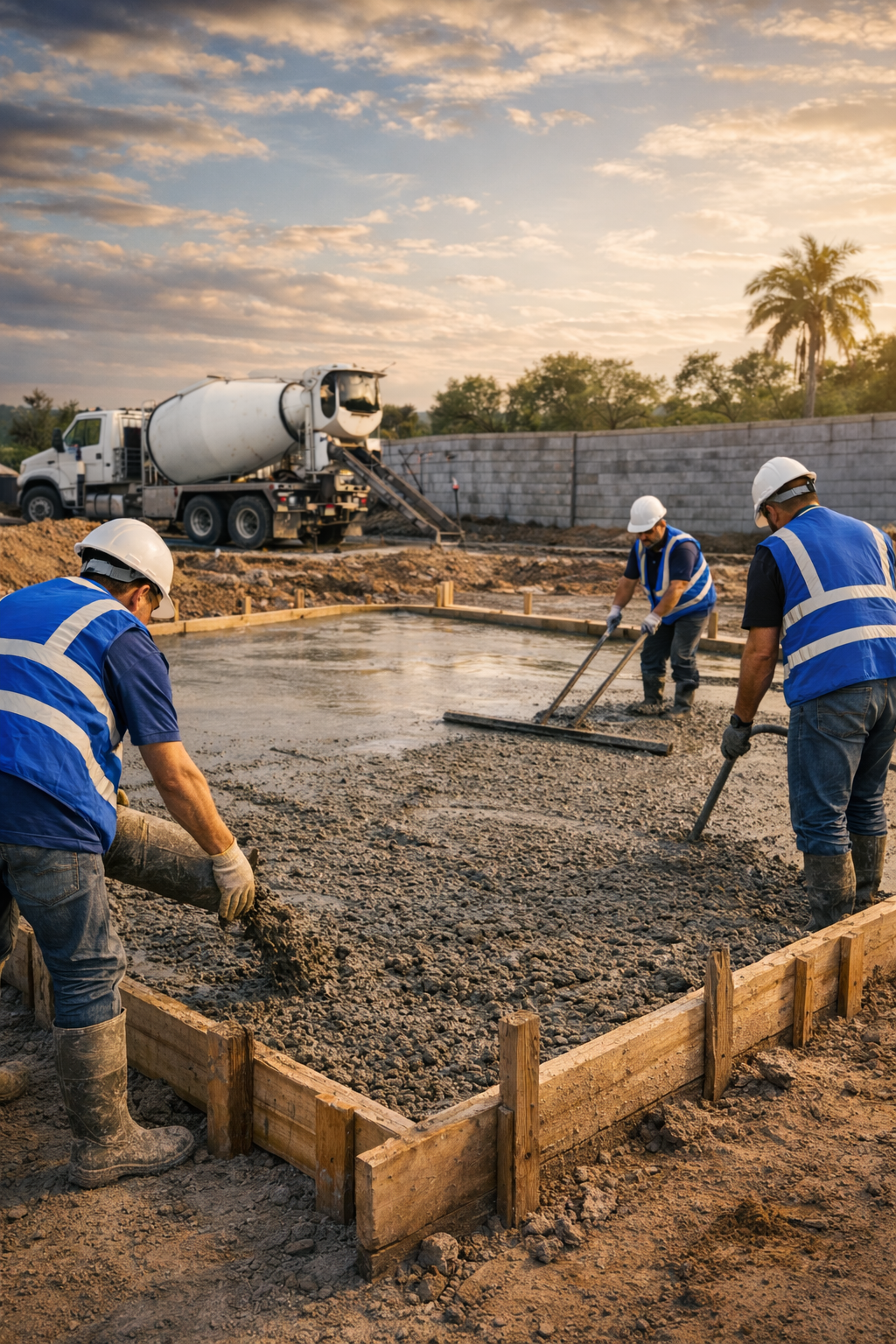
- Visual and tactile inspection of existing slab: check for delamination, cracks, previous coatings, and spalling. Moisture tests: calcium chloride tests or relative humidity probes in drilled cores to measure vapor emission rates. Bond tests: small patch applications to confirm adhesion of chosen systems. Crack evaluation: identification of structural cracks that require routing, stitching, or structural repair rather than cosmetic coating.
If a contractor skips moisture testing in Tampa, consider that a red flag. Moisture vapor transmission is the main reason coatings fail here.
Preparation matters more than the finish
I once watched a homeowner pay for a high-end epoxy with flakes and a high-gloss top coat, only to have it bubble and peel in less than one year. The contractor had power-washed the slab and troweled the epoxy over a surface with laitance and curing compounds. The lesson is simple: coatings fail for two reasons, poor substrate and incorrect moisture management. Preparation is not optional.
Typical preparation steps you should require in writing include grinding or shot blasting to achieve a clean, profiled surface; removal of oil and grease, sometimes with hot pressure washing and chemical degreasers; and concrete repairs such as filling pitting or chasing out deteriorated edges. Grinding also gives contractors a better read on the slab condition, which is essential to choose a compatible system.
Maintenance expectations and lifecycle costs
A common homeowner mistake is choosing a cheap coating and assuming it is maintenance free. Real-world lifecycle comparison tells a different story.
Polished concrete will often cost more up front than a basic epoxy paint, but it ages gracefully for many years with occasional re-polishing or periodic applications of a densifier. Epoxy may need strip-and-recoat cycles every 5 to 10 years depending on traffic and moisture conditions. Polyaspartic or polyurea systems can last longer and resist abrasion, but when repairs are required they are more complicated and costly than simply resealing polished concrete.
Maintenance routines are straightforward if you plan for them. Sweep daily or after use to remove grit that abrades the surface. Clean spills promptly with a neutral pH cleaner and avoid acidic products that may etch certain finishes. Reapply a topcoat or sealer when wear patterns begin to show. A short seasonal inspection can catch small problems before they become large repairs.
What to expect from concrete finishing contractors
When you contact a company such as All Phase Concrete or another reputable concrete services provider in Tampa FL, you should expect a clear process laid out in the estimate. A credible bid covers the scope, timeline, substrate preparation steps, specific materials with brand names, warranty details, and a maintenance recommendation.
Watch for these signs of professionalism. The estimator or project manager should ask about the intended use of the garage, any special chemical exposure (for example, battery acid from electric vehicles), desired downtime, and preferred aesthetics. They should provide references or photos of similar projects. They should be willing to perform or at least arrange for moisture testing before committing to a coating system.
A practical checklist to use when comparing bids
Is moisture testing included and documented. Are surface preparation methods specified by name, such as diamond grinding or shot blasting. Are materials and product brands listed, with application thickness and number of coats. Is there a warranty that covers adhesion and not just labor.Preparing for the job and realistic scheduling
Plan around humidity and temperature. In Tampa, ideal application windows occur when humidity is lower and overnight temperatures are not dropping suddenly. Contractors will schedule polyaspartic work for days when a rain front is not imminent, because rapid relative humidity changes affect film formation.
Also plan for downtime. Even fast-cure systems require some hours before light traffic and up to 24 to 72 hours for heavier loads. If you park a daily driver in the garage, coordinate a place to leave your vehicle for the duration spelled out in the contract.
Edge cases and trade-offs
If your garage sits over a living space or contains in-floor drains, think about waterproofing and vapor control. Some coatings can hide high vapor emissions temporarily, but those are prone to blistering later. In cases of exceptionally high moisture drive, the correct solution may be a stainless steel mesh system or a full slab replacement with a moisture mitigation membrane. Those are more expensive, but cheaper solutions will only postpone failure and increase lifetime costs.
If your slab has hairline cracks from shrinkage, a flexible sealant beneath a coating can accommodate movement. Structural cracks that are active require repair before any cosmetic system is applied. Beware of contractors who promise to hide structural issues with a thin overlay. That is not real repair.
Costs you should expect in Tampa
Prices vary regionally and by complexity. As a general guide, simple grinding and polishing can start in the mid hundreds of dollars per 100 square feet and escalate with higher gloss levels and densifiers. Epoxy systems applied after proper prep often fall in a mid-range price bracket, and high-performance polyaspartic systems command a premium. Overlays and structural repairs add to price accordingly.
Rather than chasing the lowest bid, compare line item estimates. A contractor who quotes a low final number without listing preparation and material specifics is probably cutting corners. Conversely, a detailed bid that explains why shot blasting and moisture mitigation are necessary is offering transparency you can trust.
A few local considerations for Tampa homeowners
If your property is within a few miles of the bay, expect more frequent inspections of the floor coating in early years. Salt air can accelerate corrosion of any metal embedded near the surface, like seam plates or connectors in overlay systems. Also, garages that double as workshops with chemical exposure benefit from thicker systems and specific chemical-resistant topcoats.
If you plan to use your garage for EV charging, check for small oil or coolant leaks underneath those vehicles before selecting a coating. Electric vehicles tend to drip less, but battery coolant or maintenance chemicals might react differently with films. Ask your contractor for chemistry compatibility if you foresee unusual exposures.
Selecting the right contractor
Credentials matter less than documented craft. Look for contractors who can show before-and-after photos, provide at least three references, and include a clear warranty that differentiates product warranty from workmanship warranty. Ask about insurance and whether they carry general liability and workers compensation.
Knowing a contractor's local experience is critical. Firms that work across multiple climates may not be familiar with Tampa specifics. All Phase Concrete and other local concrete services providers who list Tampa FL among their core markets typically understand local substrate quirks and humidity patterns. Still, verify that whatever company you choose commits to moisture testing and to a prescribed mitigation path if high vapor readings appear.
Final practical tips before you sign
Get everything in writing, including the brand names and product data sheets for coatings and primers. Ask for a timeline that tolerates weather delays and spells out expected cure times before foot and vehicle traffic. Request a written maintenance plan that explains what cleaners to use and how often to expect recoat windows.
If you want aesthetic flair, consider combining approaches: stained concrete with a clear polyaspartic topcoat, or a stained band where oil splatters collect, and polished concrete in the driving path. These hybrid solutions balance looks and protection, but they require thoughtful detailing during specification to avoid incompatible materials.
A garage floor is one of the few home upgrades that pays back through durability and usable square footage. In Tampa, the right decision is informed by humidity management and careful surface preparation, not by picking the shiniest sample board. Work with concrete finishing contractors who test, explain trade-offs, and stand behind their work. With proper prep and the right material system, your garage will handle Tampa's weather, hold up under daily use, and look intentional rather than patched together.